Short answer: AI email marketing means using AI to help plan, write, personalize and time your marketing emails, for example drafting newsletters, suggesting subject lines, tailoring messages to customer groups and running automated welcome or follow-up sequences. A person still reviews each email, and you only send to people who have given permission.
What can AI do in email marketing?
| Task | How AI helps | What you check |
|---|---|---|
| Newsletters | Drafts from your news, offers and tips | Facts, prices and tone |
| Subject lines | Suggests several options to test | Nothing misleading |
| Segments | Groups customers by what they bought or asked about | That groups make sense |
| Personalization | Tailors wording to each segment | No awkward or private details |
| Automated sequences | Writes welcome, follow-up and win-back emails | Timing and frequency |
| Reporting | Summarizes opens, clicks and replies | What to change next |
Which automated emails should a small business set up first?
- Welcome email for new subscribers or customers, with what to expect.
- Inquiry follow-up for people who asked a question but did not book. See how to automate lead follow-up.
- After-service email with a thank-you and a review request.
- Win-back email for customers who have not returned in a while.
- Reminder emails for appointments, renewals or seasonal services.
How do you start with AI email marketing?
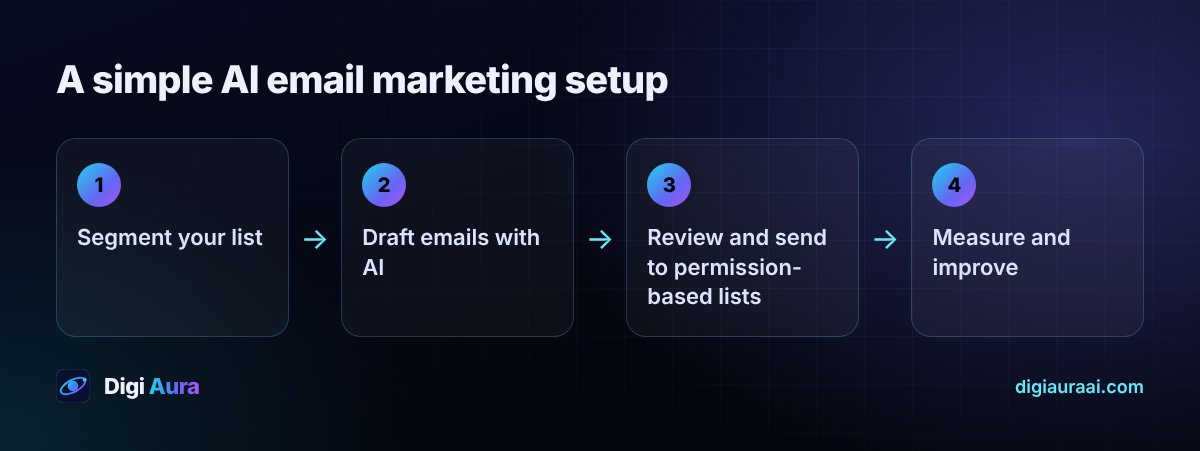
- Check your email platform first. Many already include AI writing and send-time features.
- Clean and segment your list, for example new customers, repeat customers and past inquiries.
- Give the AI your brand voice: a short guide with your tone, words to avoid and your key offers.
- Draft, then edit. Ask for two or three versions and pick the best parts.
- Test one thing at a time, such as the subject line, and keep what works.
For the rest of your marketing, read AI marketing for small business.
How do you stay compliant and personal?
- Only email people who gave permission, and include an easy unsubscribe link in every marketing email. Follow the email marketing laws that apply to you, such as CAN-SPAM in the US.
- Use a real sender name and a reply address someone reads.
- Never invent urgency or claims, such as fake deadlines or results.
- Keep private data out of prompts unless the tool is approved for it.
- Do not over-send. Fewer, more useful emails beat frequent generic ones.
How do you measure AI email marketing?
Look past opens: track clicks, replies, bookings and sales from each email or sequence. Review monthly, keep the emails that drive action and rewrite or drop the rest. An AI dashboard can bring these numbers together with your other marketing results.
Should you do it yourself or get help?
If you send a newsletter yourself, AI can cut writing time a lot. If you would rather hand off planning, writing and setup, our AI content creation services and AI automation services cover emails and automated sequences, always with your approval.
Frequently asked questions
What is AI email marketing?
Using AI to help plan, write, personalize and time marketing emails, with a person reviewing them before they are sent.
Can AI write my marketing emails?
AI can draft newsletters, subject lines and sequences quickly. Edit for accuracy and your own voice before sending.
Is AI email marketing legal?
Yes, as long as you follow email marketing laws, such as getting permission where required, including an unsubscribe link and using accurate sender details and subject lines.
Which AI email tool should a small business use?
Start with the AI features in the email platform you already use. Switch only if it lacks something you need.
How often should a small business send marketing emails?
Send when you have something useful to say. A steady schedule, such as once or twice a month, usually works better than frequent emails.
Want email marketing that runs smoothly and sounds like you? Book an AI consultation.