Short answer: a chatbot is built to answer questions in a conversation. An AI agent can do more: it works toward a goal by taking steps in other tools, such as looking up a customer in your CRM, booking an appointment or sending a follow-up email. Many businesses start with a chatbot and add agent abilities where they save real time.
The two terms are often mixed up, and many products now do a bit of both. Here is a simple way to tell them apart.
What is a chatbot?

A chatbot is a program that talks with people, usually on a website or in a messaging app. A modern AI chatbot understands everyday language and answers from information you give it, such as your services, prices, hours and policies.
A good business chatbot:
- Answers common questions day or night.
- Collects a visitor's name and contact details.
- Hands the conversation to a person when needed.
You can see a live example in the chat bubble on this website. Our AI chatbot development page explains how we build them. For the phone version, see how an AI receptionist works.
What is an AI agent?
An AI agent is an AI system that can plan and take actions to complete a task, not just reply. It is connected to tools, such as your email, calendar, CRM or spreadsheets, and it can use them within limits you set.
For example, a lead follow-up agent could:
- Read a new inquiry from your website.
- Check whether the person is already in your CRM.
- Draft a personal reply and a suggested appointment time.
- Wait for your approval, then send it and update the CRM.
See custom AI agents for business for more examples.
What is the difference between an AI agent and a chatbot?
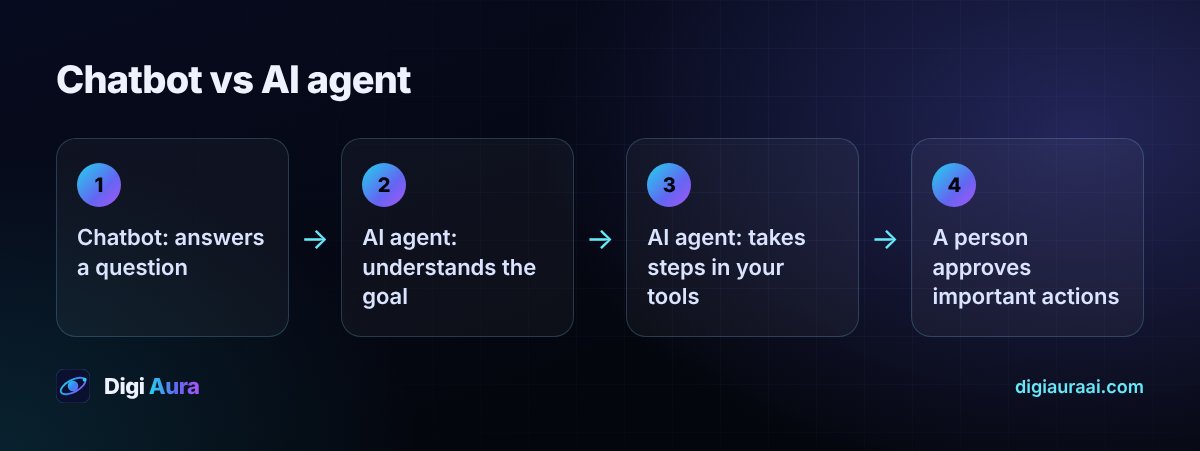
| Chatbot | AI agent | |
|---|---|---|
| Main job | Answer questions in a conversation | Complete a task or goal |
| Works in | A chat window | Your tools: email, CRM, calendar, files |
| Takes actions | Rarely, usually just collects details | Yes, within set permissions |
| Typical use | FAQs, lead capture, booking links | Lead follow-up, research, data entry, scheduling |
| Risk level | Lower | Higher, so it needs guardrails and approvals |
The line is blurring. A chatbot that books appointments directly in your calendar is already acting a bit like an agent.
Which one does a small business need?
Choose a chatbot if your main problem is answering the same questions again and again, or missing website inquiries outside business hours.
Choose an AI agent if your main problem is the work that happens after the conversation: updating records, sending follow-ups, preparing quotes or researching leads.
Many businesses start with a chatbot, then connect it to an agent that handles the follow-up work. Our guide to automating customer service shows how these pieces fit together.
Are AI agents safe to use in a business?
They can be, with the right guardrails:
- Limit permissions. Give the agent access only to the tools and data the task needs.
- Require approval for anything that sends messages to customers, spends money, signs documents or deletes data.
- Keep logs so you can see what the agent did and why.
- Start narrow. One well-defined task is safer and easier to measure than a general assistant with access to everything.
Major AI companies are building these approval steps into their own agent products, which is a good sign the industry takes the risk seriously. Our guide on how to build an AI agent for your business shows how to set these up step by step.
What are good first projects for AI agents?
- Following up on new leads within minutes. See how to automate lead follow-up.
- Turning form submissions into CRM records and draft quotes.
- Researching a prospect's business before a sales call.
- Preparing a weekly summary of sales, bookings and inquiries.
If you are unsure where to start, see What is AI automation? for more ideas, or our main guide on how to use AI in your business. If you would rather have agents built for you, read what an AI automation agency does.
Frequently asked questions
Is ChatGPT a chatbot or an AI agent?
ChatGPT started as a chatbot. It now includes agent-like features that can browse, use tools and complete multi-step tasks, so it can act as both depending on how it is used.
Can a chatbot become an AI agent?
Yes. When a chatbot is connected to tools like your calendar or CRM and allowed to take actions, it starts working like an agent. That is often the natural next step.
Are AI agents more expensive than chatbots?
Usually, yes, because they connect to more systems and need more testing and safeguards. The cost depends on how many tools are involved and how complex the task is.
Do AI agents replace employees?
For most small businesses, no. Agents take over repetitive steps so staff can focus on customers and decisions that need a person.
What is the biggest risk with AI agents?
Taking the wrong action without anyone noticing. Approval steps, limited permissions and activity logs reduce that risk.
Want to know whether a chatbot or an AI agent fits your business? Book an AI consultation and we will map it out with you.